Health and Safety Policy for Chelsea Cleaners
 Chelsea Cleaners is committed to maintaining a safe, healthy, and responsible workplace for staff, clients, visitors, and anyone affected by our operations. This health and safety policy sets out the standards we follow to reduce risk, support wellbeing, and ensure that cleaning services are delivered in a controlled and professional manner. We aim to create a work environment where hazards are identified early, incidents are prevented where possible, and everyone understands their role in keeping the workplace safe.
Our approach is based on prevention, awareness, and accountability. Cleaning work can involve slips, trips, manual handling, chemical exposure, electrical equipment, and repetitive tasks. For that reason, all activities must be carried out with care and with proper attention to safe systems of work. Every employee is expected to act responsibly, follow instructions, and report anything that may affect safety. Managers are responsible for providing the support, training, and supervision needed to make these expectations practical in day-to-day operations.
We will regularly review our cleaning safety procedures to ensure they remain effective, suitable, and up to date. Where risks change, controls will be adjusted promptly. This includes reviewing equipment, work methods, storage arrangements, and staff awareness. By doing so, Chelsea Cleaners can maintain consistent standards and protect the people who rely on our services.
Responsibilities and Safe Working Practices
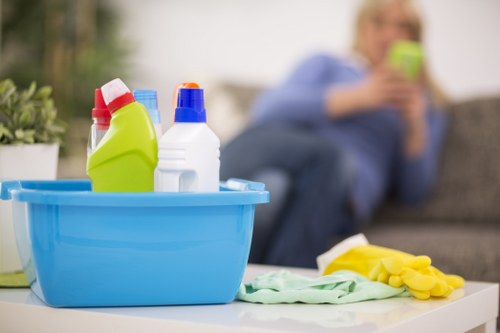 Chelsea Cleaners expects all staff to take reasonable care of their own health and safety and that of others. This includes using equipment correctly, wearing any required protective items, and following site-specific instructions. Supervisors must ensure tasks are planned safely, hazards are assessed, and workers are not placed under pressure to complete jobs in a way that increases risk. No task should be treated as too small to require careful attention.
Safe working practices include maintaining good housekeeping, keeping walkways clear, and storing supplies in a secure and tidy way. Wet floors must be marked appropriately, and cables or tools should never create unnecessary trip hazards. Where cleaning takes place around the public or in occupied spaces, staff must remain alert to movement around them and work in a way that avoids disruption. This helps support a safer environment for everyone present.
Manual handling is a key concern in cleaning operations. Staff should avoid lifting or moving items that are too heavy or awkward without assistance or mechanical support. Loads should be assessed before movement, and correct posture should be used whenever possible. Where a task cannot be completed safely, it must be paused and reported. Taking a cautious approach reduces the likelihood of strains, sprains, and longer-term injuries.
Training, Equipment, and Chemical Safety
 All employees will receive appropriate health and safety training before carrying out assigned duties and whenever new risks or procedures are introduced. Training may cover safe use of cleaning products, proper handling of equipment, emergency response, and incident reporting. Refresher sessions will be provided where necessary so that knowledge remains current and practical. Staff are expected to ask questions if they are unsure how to complete a task safely.
Cleaning chemicals must be used and stored in accordance with manufacturer instructions and internal procedures. Containers should remain labelled, and products must never be mixed unless the instructions specifically allow it. Personal protective equipment, such as gloves or eye protection, should be used when required. Good ventilation should also be maintained during chemical use whenever possible. These steps help reduce the risk of irritation, burns, or harmful exposure.
Equipment safety is equally important. Machines, extension leads, and handheld tools should be checked before use and removed from service if damage is suspected. Staff must not bypass safety features or use faulty equipment. Any defect should be reported immediately so that corrective action can be taken. A simple but disciplined approach to equipment care reduces downtime and supports safer cleaning operations.
Risk Assessment, Incident Reporting, and Emergency Action
Chelsea Cleaners will assess workplace risks regularly and whenever changes occur that could affect safety. Risk assessments help identify hazards, decide who may be harmed, and determine suitable control measures. They are an important part of our safety policy because they allow us to act before problems occur. Controls may include changing cleaning methods, restricting access during certain tasks, or increasing supervision in higher-risk areas.
All accidents, near misses, and unsafe conditions must be reported as soon as possible. Reporting allows the organisation to investigate causes, prevent recurrence, and improve working arrangements. Even when no injury occurs, near misses can reveal weaknesses in procedures that need attention. Staff should never ignore a hazard simply because it has not yet caused harm. Prompt reporting is a shared responsibility and an essential part of a strong safety culture.
In an emergency, staff must follow established procedures, remain calm, and take action only within their level of training. This may include raising the alarm, evacuating when required, or providing basic first aid if appropriate and safe to do so. Emergency routes and exits must remain unobstructed at all times. Clear planning supports a faster and more controlled response when unexpected situations arise.
Monitoring, Wellbeing, and Continuous Improvement
 Chelsea Cleaners recognises that workplace wellbeing is closely linked to safety. Fatigue, stress, and poor communication can increase the chance of mistakes, so managers should monitor workloads and encourage open discussion about concerns. Staff are expected to work in a way that respects both physical and mental health, including taking breaks where planned and raising any issue that could affect safe performance.
We will monitor compliance with this policy through supervision, inspection, and periodic review. Findings will be used to improve training, revise procedures, and strengthen controls where needed. Safety is not a one-time requirement but an ongoing process of observation and improvement. Each employee has a part to play in maintaining standards and making sure that safe practice remains part of everyday work.
Continuous improvement is central to our commitment. When new equipment, products, or methods are introduced, they will be evaluated carefully before use. Lessons learned from incidents or operational changes will be incorporated into future practice. This ensures that Chelsea Cleaners continues to provide a service that is both effective and responsible.
Policy Commitment
 Chelsea Cleaners expects this cleaning health and safety policy to be followed by everyone involved in our work. Managers must lead by example, and staff must cooperate fully with safety measures, training, and reporting requirements. By working together, we can reduce risk, protect wellbeing, and maintain high standards of service in a professional and safe manner.
This policy will be reviewed periodically and updated when necessary to reflect operational needs, improved practices, or changing risk factors. It should be read alongside relevant internal procedures and used as a practical standard for safe conduct. Our goal is simple: to deliver reliable cleaning services while placing health, safety, and care at the heart of everything we do.